






Trustee
Trustee
Successor Trustee
Successor Trustee
Beneficiary
Beneficiary
Business Structure

TRUST FORMATION GUIDE

508(C)(1)(A) Organizations: The Complete Guide

Learn how to properly structure religious organizations with LLCs or corporations

🎧 Listen to this page — Perfect for driving!

508(C)(1)(A) Organizations:
The Complete Guide

Start My Business

0:00

0:00

Tax-Efficient Structure
Legal Protection
Complete Documentation
Cost Savings

A properly structured 508(C)(1)(A) faith-based organization provides legitimate religious and charitable services while enjoying certain tax advantages. The following framework outlines the key components of such an organization.

The key is that the organization must genuinely and primarily operate for religious/charitable purposes, not as a vehicle for personal financial benefit. The tax benefits follow from the legitimate religious/charitable activities.

  • Focus on genuine religious mission and charitable activities
  • Maintain services that fulfill health and welfare needs
  • Ensure that exempt activities remain the primary focus
  • Trust governed by clear charitable purposes
  • Beneficiaries are the religious organization or its charitable activities
  • Properly documented governance structure with independent oversight
  • Direct contributions/donations
  • Income from related activities supporting religious mission
  • Limited income from passive investments
  • Potentially own a mission-aligned subsidiary
  • Receive reasonable, documented compensation for actual services
  • Set compensation at market rates (1.1%-1.5% of assets or $100-175/hour)
  • Keep thorough records of all activities and time spent
  • Pay their personal income tax on compensation received
  • Donations to the organization are tax-deductible for donors
  • Income used for religious/charitable purposes isn't subject to organizational income tax
  • Assets held by the organization can grow without capital gains tax if used for exempt purposes
  • Can operate certain mission-aligned activities without taxable income

The Complete Guide to 508(C)(1)(A) Organizations for Business Owners

A strategic approach to religious organizations and business structures

Start My Business Inc. provides comprehensive trust formation services beyond 508(C)(1)(A) organizations. Here are the six most popular trusts people use for family legacy planning and asset protection:

  • 1

    Revocable Living Trust

    The most common starting point for estate planning. You maintain full control during your lifetime and can modify or revoke it anytime. Assets transfer to beneficiaries without probate, maintaining privacy and speeding up distribution. However, it offers minimal asset protection since you retain control.

  • 2

    Irrevocable Life Insurance Trust (ILIT)

    Specifically designed to hold life insurance policies outside your taxable estate. The death benefit passes to beneficiaries free of estate taxes, which is particularly valuable for high-net-worth families. Once established, you give up control of the policy, but the tax savings can be substantial.

  • 3

    Dynasty Trust (Generational Trust)

    Built for multi-generational wealth transfer, these trusts can last for multiple generations (or perpetually in certain states like Nevada, South Dakota, and Delaware). Assets grow tax-free and are protected from beneficiaries' creditors, divorces, and lawsuits across generations.

  • 4

    Asset Protection Trust (Domestic or Offshore)

    Specifically structured to shield assets from future creditors, lawsuits, and judgments. States like Nevada, Wyoming, Delaware, and South Dakota offer strong domestic options. These are irrevocable and require giving up some control, but provide robust protection when properly funded in advance of any claims.

  • 5

    Charitable Remainder Trust (CRT)

    Allows you to donate assets, receive income during your lifetime, and ultimately benefit a charity. You get an immediate tax deduction, avoid capital gains on appreciated assets, and create a family legacy of giving while still receiving income.

  • 6

    Family Limited Partnership with Trust (or Family LLC Trust)

    Combines a family limited partnership or LLC with trust structures to transfer business interests or real estate at discounted values. Provides asset protection, facilitates gradual wealth transfer to children, and allows senior family members to maintain management control while reducing estate taxes.

Not sure which trust is right for your situation? Our experts can help you choose the perfect structure for your family legacy and asset protection goals.

Get a Free Consultation

Start My Business Inc. provides comprehensive formation and compliance services for 508(C)(1)(A) faith-based organizations. Here are 20 types of faith-based LLC businesses that could have a 508(C)(1)(A) trust as a beneficiary:

Traditional Church Ministries

  • 1

    Non-Denominational Churches

    Independent community worship centers and congregations

  • 2

    Denominational Church Plants

    Baptist, Methodist, Pentecostal, Apostolic, and other established faith traditions

  • 3

    Storefront & Community Churches

    Urban ministry centers and neighborhood congregations

  • 4

    House Churches & Home Fellowship Networks

    Intimate worship gatherings and small group ministries

  • 5

    Online & Virtual Church Ministries

    Digital congregations with streaming services and virtual membership

  • 6

    Multi-Site Church Networks

    Ministries operating multiple campuses under unified leadership

Outreach & Community Ministries

  • 7

    Prison & Jail Ministries

    Faith-based outreach serving incarcerated individuals and families

  • 8

    Homeless Shelter & Housing Ministries

    Charitable organizations providing shelter and transitional housing

  • 9

    Food Pantry & Feeding Ministries

    Community food banks and meal programs

  • 10

    Youth & Young Adult Ministries

    Faith-based programs serving children, teens, and young adults

  • 11

    Addiction Recovery & Counseling Centers

    Biblical counseling and rehabilitation programs

Faith-Based Business Ministries

  • 12

    Religious Publishing Houses

    Books, devotionals, Bible studies, and curriculum development

  • 13

    Worship Music & Media Production

    Recording labels and faith-based content creation

  • 14

    Christian Bookstores & Resource Centers

    Retail operations supporting ministry outreach

  • 15

    Faith-Based Broadcasting Networks

    Radio, podcast, and streaming platforms

  • 16

    Religious Retreat & Conference Centers

    Camps, event venues, and spiritual gathering spaces

  • 17

    Private Religious Schools & Academies

    K-12 education and homeschool programs

  • 18

    Faith-Based Childcare & Early Learning

    Preschools and daycare ministries

  • 19

    Mission Trip & Religious Travel

    Pilgrimage services and international mission coordination

  • 20

    Faith-Based Senior Living & Care

    Assisted living and elder care ministries

Our Services Include:

  • 508(C)(1)(A) Trust Formation & Documentation
  • Faith-Based LLC Structuring
  • Compliance Framework Implementation
  • Ongoing Support & Maintenance

Included With Every Trust
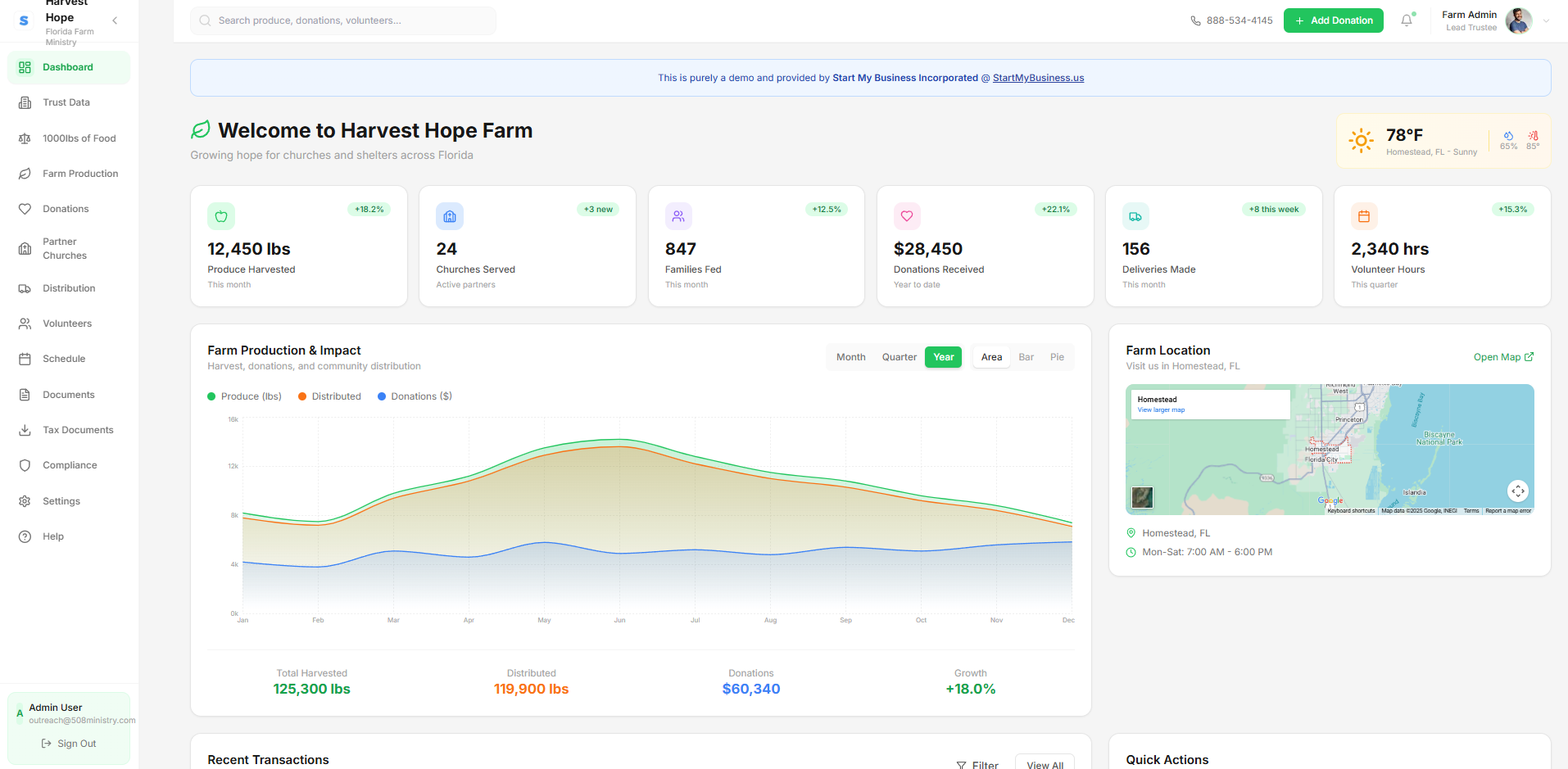
508(C)(1)(A) Ministry Software Dashboard

Lifetime 508 trust management software — the critical advantage that has saved our clients millions in taxes over the life of their organizations. See live DEMO link below!
Understanding 508(C)(1)(A) Organizations

A 508(C)(1)(A) organization is a special type of religious entity that receives automatic tax-exempt recognition from the IRS without having to apply for 501(c)(3) status. While this provides significant advantages, these organizations must adhere to specific guidelines to maintain their tax-exempt status.

Key Benefits:

  • Automatic tax exemption without filing Form 1023
  • No annual Form 990 filing requirement
  • Protection of religious autonomy
  • Potential for integration with business entities

Step 1: Establish Your Religious Organization

Define Your Religious Purpose

Start by articulating a clear religious mission that aligns with your organization's values and goals. For example: "To promote spiritual growth through community service and education."

Choose a Meaningful Name

Select a name that reflects your religious purpose and resonates with your community, such as "Harvest Hope Farm" or "Divine Purpose Fellowship."

Professional Tip: With our Business Build-Out Package, we provide expert guidance on establishing your religious organization with the proper documentation and structure from day one, saving you time and potential legal headaches.

Step 2: We Draft Your Trust Documents & Add To Your Trust Management Dashboard

The trust documents are the foundation of your 508(C)(1)(A) organization. They outline your religious goals, operational structure, and governance.
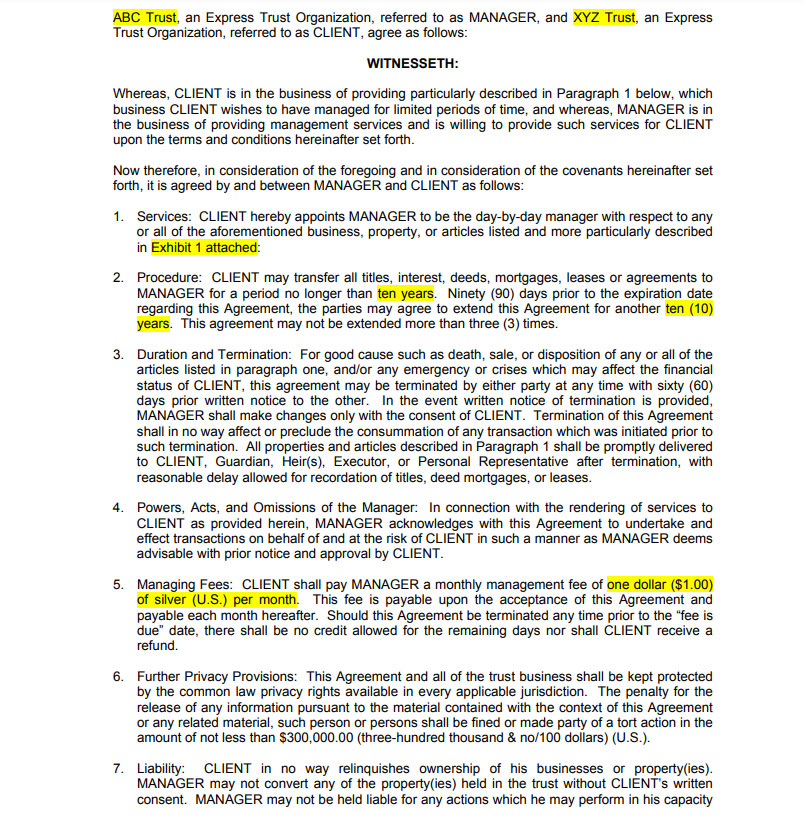
508(C)(1)(A) Trust Template

Want the full trust guide and template? Contact us today!

Essential Trust Document Elements:

  • Clear statement of religious purpose and beliefs
  • Governance structure and trustee appointment process
  • Rules prohibiting private inurement (profits must further the religious mission)
  • Dissolution clause specifying how assets will be distributed
  • Operational guidelines for religious activities

Our Solution: Our Business Build-Out Package includes professional trust document drafting with legally sound language that satisfies IRS requirements while protecting your organization's interests.

Step 3: We Form Your LLC or Corporation

State Filing Requirements

Visit your state's business website (typically Secretary of State) to file the necessary forms for creating an LLC or corporation. This typically involves:

  • Filing Articles of Organization (LLC) or Incorporation
  • Paying state filing fees (usually $50–$200)
  • Creating an operating agreement or bylaws

Linking to Your Trust

To properly structure your business entity under the 508(C)(1)(A) organization:

  • List the religious trust as the owner in the LLC's ownership documents
  • Ensure the operating agreement references the trust's ownership
  • Document how the LLC furthers the religious mission

Example Structure:

Trust Name: Harvest Hope Farm Trust (508(C)(1)(A))

Business Entity: Harvest Hope Farm LLC

Relationship: The LLC is owned by the trust and operates a faith-based farm ministry serving churches and shelters in Florida, with profits supporting the trust's religious activities. See a live demo at 508ministry.com

Step 4: We Align Your Business Activities with Your Religious Purpose

The business entity must actively support your religious mission. This alignment is crucial for maintaining tax-exempt status.

Compliant Examples

  • Food service supporting community meals
  • Publishing religious literature
  • Creating religious educational materials

Non-Compliant Examples

  • Gaming apps unrelated to religion
  • Investment vehicles for individual profit
  • Businesses with no religious connection

Documentation Needed

  • Mission statements
  • Business plans showing religious connection
  • Records of religious activities

Business Build-Out Advantage: Our package includes comprehensive business activity alignment planning, ensuring your operations satisfy IRS scrutiny while effectively furthering your religious mission.

Step 5: Your Dashboard Software Follows Proper Tax Rules With Automatic Reminders

Critical Tax Compliance Factors:

No Private Inurement

Funds generated by the LLC must be used for the religious mission, not for personal gain of individuals. This is a foundational requirement that the IRS monitors closely.

Unrelated Business Income

File Form 990-T for any income from activities not substantially related to your religious purpose. This income may be subject to Unrelated Business Income Tax (UBIT).

Record Keeping

Maintain detailed records of all activities, donations, expenses, and how they relate to your religious mission to demonstrate compliance during potential IRS inquiries.

Employment Taxes

Religious organizations must still comply with employment tax requirements if they have employees, including ministers (though special rules may apply).

Step 6: The 508 Trust Management Software Maintains Ongoing Compliance

Establishing your structure is just the beginning. Maintaining compliance requires ongoing attention to several key areas:

Regular Religious Activities

Consistently hold and document religious services, community outreach, or educational programs that align with your stated religious purpose. Input a few words or sentences and the software auto-populates the day's events for future reference.

Political Activity Restrictions

Avoid endorsing political candidates or engaging in substantial lobbying activities, as these can jeopardize your tax-exempt status.

Annual State Filings

Stay current with state business filings for your LLC or corporation, including annual reports and fee payments to maintain good standing. Your dashboard will give you notices with pre-filled documentation for submission. Want us to do the annual filing? No problem!

Regular Board Meetings

Hold and document regular trustee or board meetings with formal minutes that reflect discussions about furthering your religious mission. Just hit record in the app. The meeting minutes audio will be transcribed and added to your compliance audio folder.

Why Choose Our Trust Business Build-Out Package

Our comprehensive Business Build-Out Package is designed to seamlessly integrate a 508(C)(1)(A) organization structure into any business model, providing you with:

  • Professional trust document drafting by experienced attorneys
  • Complete LLC/corporation formation with proper ownership structure
  • Customized business activity alignment strategy
  • Comprehensive compliance documentation system
  • Ongoing support and advisory services
  • Protection from common pitfalls and IRS scrutiny

Important Considerations and Warnings

Critical Warnings

The 508(C)(1)(A) structure offers significant benefits when implemented correctly, but comes with important cautions:

  • Not a Tax Loophole: This structure requires genuine religious purpose and activities. The IRS actively investigates organizations suspected of abusing religious exemptions.
  • Professional Guidance Required: The complexity of these structures demands professional legal and tax expertise. Mistakes can result in substantial penalties and loss of tax exemption.
  • Ongoing Commitment: Maintaining this structure requires consistent religious activities and proper documentation, not just initial setup.

Ready to Get Started?

Our team of business formation experts is ready to help you establish a compliant and effective 508(C)(1)(A) organization structure that aligns with your goals and religious mission.

Step 1

Schedule a free consultation with our business structure experts

Step 2

Receive your customized 508(C)(1)(A) implementation plan

Step 3

We handle all formation paperwork and compliance requirements

Included with All Trust Packages

Your 508(C)(1)(A) Ministry Deserves
Professional Management Software

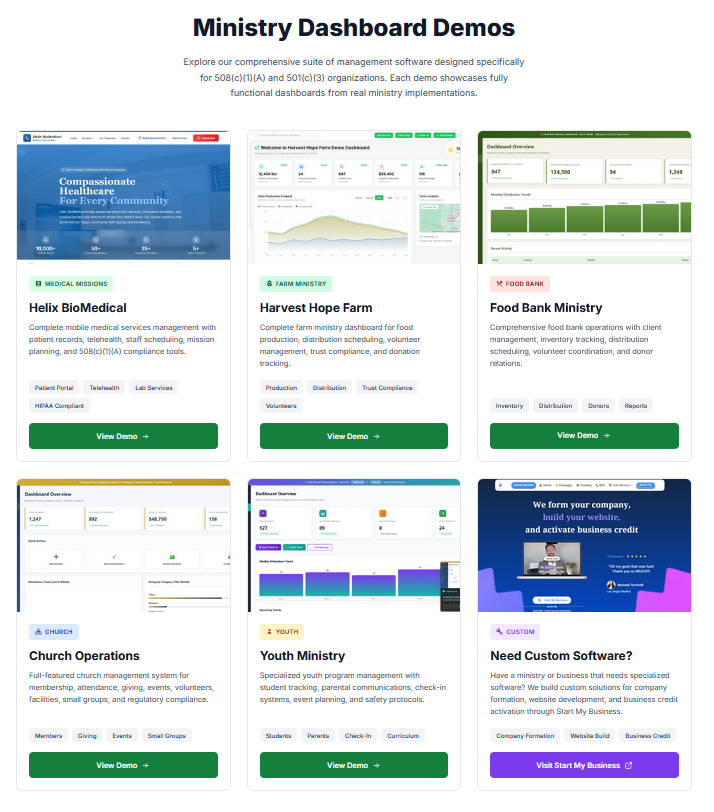
Every trust package includes full access to our professional Ministry Management Dashboard. Already have a website? We'll seamlessly add a dashboard access tab to your existing site. Don't have a website yet? We'll create a complete, professional ministry website with integrated software and database architecture—all included at no extra cost.

You get a complete website build-out or edits to your current website to add password-protected 508 ministry software access. Want to see some of our other website builds and our design capabilities? Check out some of our recent builds:

View Our Web Design Portfolio

Admin & Trustee Access

Secure login portal for ministry administrators and trustees to manage operations, view reports, and oversee all activities.

Donor Portal

Donors can log in to view their complete contribution history and track their charitable giving throughout the year.

Tax Document Downloads

Donors instantly download tax-deductible charitable contribution documents for tax write-offs and IRS reporting.

Complete Reporting

Comprehensive reporting for donations, distributions, volunteers, and operations—ready for auditors or state review at any time.

Public Transparency

Share access with donors, auditors, or state agencies to review public reporting and maintain complete transparency.

Database Architecture

Secure, scalable database infrastructure to store and manage all your ministry data with enterprise-grade security.

Start My Business Inc. provides comprehensive formation and compliance services for 508(C)(1)(A) faith-based organizations. Here are 20 types of faith-based LLC businesses that could have a 508(C)(1)(A) trust as a beneficiary:

Traditional Church Ministries

  • 1

    Non-Denominational Churches

    Independent community worship centers and congregations

  • 2

    Denominational Church Plants

    Baptist, Methodist, Pentecostal, Apostolic, and other established faith traditions

  • 3

    Storefront & Community Churches

    Urban ministry centers and neighborhood congregations

  • 4

    House Churches & Home Fellowship Networks

    Intimate worship gatherings and small group ministries

  • 5

    Online & Virtual Church Ministries

    Digital congregations with streaming services and virtual membership

  • 6

    Multi-Site Church Networks

    Ministries operating multiple campuses under unified leadership

Outreach & Community Ministries

  • 7

    Prison & Jail Ministries

    Faith-based outreach serving incarcerated individuals and families

  • 8

    Homeless Shelter & Housing Ministries

    Charitable organizations providing shelter and transitional housing

  • 9

    Food Pantry & Feeding Ministries

    Community food banks and meal programs

  • 10

    Youth & Young Adult Ministries

    Faith-based programs serving children, teens, and young adults

  • 11

    Addiction Recovery & Counseling Centers

    Biblical counseling and rehabilitation programs

Faith-Based Business Ministries

  • 12

    Religious Publishing Houses

    Books, devotionals, Bible studies, and curriculum development

  • 13

    Worship Music & Media Production

    Recording labels and faith-based content creation

  • 14

    Christian Bookstores & Resource Centers

    Retail operations supporting ministry outreach

  • 15

    Faith-Based Broadcasting Networks

    Radio, podcast, and streaming platforms

  • 16

    Religious Retreat & Conference Centers

    Camps, event venues, and spiritual gathering spaces

  • 17

    Private Religious Schools & Academies

    K-12 education and homeschool programs

  • 18

    Faith-Based Childcare & Early Learning

    Preschools and daycare ministries

  • 19

    Mission Trip & Religious Travel

    Pilgrimage services and international mission coordination

  • 20

    Faith-Based Senior Living & Care

    Assisted living and elder care ministries

Our Services Include:

  • 508(C)(1)(A) Trust Formation & Documentation
  • Faith-Based LLC Structuring
  • Compliance Framework Implementation
  • Ongoing Support & Maintenance

Included FREE with Every Trust Package

All trust packages include dashboard access plus either a brand-new professional ministry website OR we'll add the dashboard access tab to your current website—your choice, no extra cost.

Full Website + Dashboard Access Included

Trust and Business Build-Out Packages

Our Trust and Business Build-Out services balance expertise, compliance rigor, and client expectations. Explore our tiered pricing, designed to be competitive and profitable while ensuring high-quality service for your unique needs. All package prices below reflect a special 35% discount!

Key Factors Influencing Price

  1. Complexity of Assets: Simple (single LLC/property) vs. complex (multi-state entities, international holdings).
  2. Jurisdiction: States with stricter compliance (e.g., CA, NY) may require more legal work.
  3. Customization: Standard vs. bespoke trust terms (e.g., dynasty provisions, ethical mandates).
  4. Ancillary Services: Coordination with CPAs, asset transfers, or post-setup maintenance.

Basic Foundation

Was: $4,500 – $6,500 $2,925 35% OFF! Start with 1/2 down 1,462.50

For: Clients with straightforward assets (1–2 LLCs, 1–2 properties, no litigation risk).

Includes:

  • Drafting of 508(c)(1)(A) trust documents.
  • Transfer of 1 LLC and 1 property into the trust.
  • Basic compliance checks (UCC lien search, title review).
  • 1-hour consultation to finalize terms.
Value Proposition:
  • Competitors often charge $5,000–$15,000 for basic trusts.
  • Our pricing undercuts national averages while delivering exceptional value for simple cases.
Complete Questionnaire to Get Started

Advanced Growth

Was: $7,500 – $12,000 $4,875 – $7,800 (35% OFF!)

For: Clients with 3–5 entities, multi-state properties, or moderate privacy needs.

Includes:

  • All Basic Foundation services.
  • Coordination with CPA for tax-neutral transfers.
  • Layered LLCs for enhanced privacy (e.g., Wyoming holding LLC + trust).
  • Custom spendthrift/anti-Bartlett clauses.
  • 2–3 hours of client consultation.
Value Proposition:
  • Reflects added complexity (e.g., multi-state filings, tax coordination).
  • Aligns with boutique law firms but avoids their $15k+ premiums.
Complete Questionnaire to Get Started

Elite Enterprise

Was: $15,000 – $25,000+ $9,750 – $16,250+ (35% OFF!)

For: High-net-worth clients (6+ entities, international assets, dynasty trusts).

Includes:

  • All Advanced Growth services.
  • Multi-jurisdictional compliance (e.g., NY trust reporting, CA LLC rules).
  • International asset coordination (foreign bank accounts, offshore entities).
  • Annual trust maintenance (amendments, IRS filings).
  • Priority support and encrypted communication.
Value Proposition:
  • Justified for clients needing ongoing, specialized support at the highest level.
  • Comparable to private wealth attorneys charging $20k–$50k, now at an exceptional value.
Complete Questionnaire to Get Started

Add-On Services (À La Carte)

  • LLC/Corporation Formation: $500–$1,500/entity (depending on state & preferred legal posture).

    🚀 Want us to craft a complete Business Build-Out for you, hitting all 45 points of compliance like pros?
    CLICK HERE

    🛠️ Or, prefer to take the reins? Snag a $125 credit + 50% OFF and build it a la carte, your way! CLICK HERE

  • Title Transfers: $300–$800/property (deed preparation, recording fees).
  • Annual Compliance Review: $1,200–$3,000/year (IRS filings, trustee reports).
  • Litigation Risk Audit: $2,000–$5,000 (creditor claim analysis, lien resolution).

Why Our Approach Works

1. Transparency & Value: Discounted flat fees (not hourly) we want to build trust and offer clear value upfront.
2. Scalability: Tiered options let you "self-select" based on needs, now with even greater affordability.
3. Enhanced Profit Margins (Internal):
  • Basic Package: Strong value proposition for the future of your family and heirs.
  • Premium Package: Leverages our proven network of paralegal support giving you ironclad confidence in operating within all compliance standards.
4. Market Positioning:
  • Significantly positioning your trust to withstand most all market conditions vs. online DIY tools that lack customization & due consideration for your specific needs and businesses.

Justifying Your Investment

Value Comparison:

"A single lawsuit or IRS penalty could cost $50k+; this trust and business structure mitigates that risk for a fraction of the price."

Tax Savings & Asset Protection:

508(c)(1)(A) benefits and robust asset protection strategies tailored to your situation.

Comprehensive Support:

Post-setup compliance checks and amendments available, in all tiers.

Our Recommendation

With our current 35% discount, the Basic Foundation Package offers an incredible entry point.

  • Shows exceptional professionalism when people who know business see your structure enhancing trust and credibility.
  • Provides a clear path for Building on the foundation of your basic foundation comprehensive trust service.
  • Offers superior customization and expertise compared to competitors.

(Note: In the consideration of generational wealth and tax incentives we're ultimately talking about potentially hundreds of thousands of dollars in savings over the life of the trust. The established value in your legal standing will be beyond question.)

Pro Tip: Ask about our 10% discount for referrals or bundled services (e.g., trust + multiple LLC formations) for even greater savings on top of current promotions!

Common Questions & Answers

Understanding the nuances of trust formation and business management is key. Click on any question below to reveal the answer.

Compliance Concerns:

  • Proper Formation & Operation: The trust must be established and operated exclusively for exempt purposes (religious, charitable, educational, etc.) as outlined by the IRS for 508(c)(1)(A) status. This is distinct from 501(c)(3)s.
  • State Laws: Adherence to state-specific trust laws, including any registration or reporting if applicable (though 508(c)(1)(A)s often have exemptions, this varies).
  • Business Formalities: Any businesses held by the trust (e.g., LLCs) must maintain their own compliance (licenses, permits, EIN, separate bookkeeping). Failure to do so can risk "piercing the veil."
  • UBIT (Unrelated Business Income Tax): If the trust or its businesses engage in regular trade or business not substantially related to its exempt purpose, the income may be subject to UBIT.

Litigation Risks:

  • Challenges to Trust Validity: If not formed or operated correctly (e.g., lack of genuine charitable purpose, commingling funds), its status can be challenged by creditors or even the IRS. This is why how we properly structure your organization and trust saves you from undue anxiety associated with questionable trust structure foundation.
  • Creditor Claims: While trusts offer asset protection, improperly transferred assets or situations where the trust is deemed an "alter ego" of an individual can expose assets. This is again why we properly structure your organization and trust saves you from undue anxiety associated with questionable trust structure foundation.

A personal guarantor is an individual who agrees to be personally responsible for a business's debt if the business defaults. This significantly impacts both the individual and potentially the trust:

  • Potential Strain on Trust Protection: If a trustee or a key individual linked to the trust personally guarantees a loan for a business owned by the trust, and that business defaults, the guarantor's personal assets are targeted first. If the trust structure was intended to protect those personal assets, a personal guarantee can circumvent that protection for that specific debt.
  • Trustee as Guarantor: Generally, a trustee should avoid personally guaranteeing debts of a trust-owned business if they are acting in their trustee capacity. It can create a conflict of interest. If the trust itself has the power to guarantee and does so (rare and complex), that's different from a personal guarantee.
  • Beneficiary as Guarantor: If a beneficiary (in the traditional sense, though 508s are different) personally guarantees a loan, their personal assets are at risk, which could impact their financial stability.
  • Strategic Considerations:
    • Aim for non-recourse loans where possible (loans secured only by the business assets, not personal guarantees).
    • Clearly understand the terms, scope, and duration of any guarantee.
    • Structure businesses within the trust to build their own creditworthiness over time to reduce reliance on personal guarantees.
    • Ensure that any guarantee does not inadvertently pledge or encumber trust assets in a way that violates the trust's terms or exempt purpose. We help you secure this through proper autograph and signature management.

Choosing a trustee is one of the most critical decisions in trust formation. The trustee holds significant legal and ethical responsibilities (fiduciary duties) to manage the trust assets and carry out its purpose.

  • Family Members:
    • Pros: Deep understanding of your values and intentions, potentially lower cost, strong personal commitment.
    • Cons: May lack financial or legal expertise, potential for emotional decision-making or family conflicts, susceptibility to undue influence, perceived bias by other stakeholders.
  • Trusted Friends or Associates:
    • Pros: May possess specific skills (e.g., business acumen), trusted relationship.
    • Cons: Similar to family members; the relationship could be strained by trustee duties, expertise might still be limited for complex trusts, potential conflicts of interest if they also have business dealings with the trust.
  • Professional Trustees: e.g., one of our Nominee Directors. Our Nominee Officer Service offers Complete Privacy and Asset Protection (Yearly) $2,424 on our do-it-yourself page.

    CLICK HERE
    • Pros: Expertise in trust law, investment management, tax, and compliance; impartiality and objectivity; continuity (an institution won't die or become incapacitated); often insured.
    • Cons: Can be more expensive, may feel less personal than an individual known to you.
  • Co-Trustees: A popular option is to appoint a combination, such as a family member alongside a professional trustee. This can balance personal insight with expert administration.
  • Key Qualities to Look For:
    • Integrity and Honesty: Paramount.
    • Financial Acumen & Prudence: Ability to manage assets wisely.
    • Understanding of Fiduciary Duties: Awareness of legal obligations.
    • Willingness and Capacity: Time and ability to perform duties diligently.
    • Impartiality: Especially important if there are multiple interests or charitable aims.
    • Attention to Detail: For compliance and record-keeping.
  • Successor Trustees: Always name one or more successor trustees in case the initial trustee(s) cannot serve.

This is a critical area where 508(c)(1)(A) trusts differ significantly from private family trusts. The primary "beneficiary" of a 508(c)(1)(A) is its exempt purpose (e.g., religious, charitable, educational). It cannot be set up for the primary private benefit of specific individuals, including family.

  • No Private Inurement: Trust assets and income cannot be used to unfairly enrich individuals connected to the trust (trustees, family members, etc.).
  • Permissible Benefits (Aligned with Exempt Purpose):
    • Individuals (including family or associates) can receive benefits if they fall within a charitable class the trust is designed to serve (e.g., scholarships to eligible students, aid to the needy, disaster relief to affected persons). The criteria must be objective and non-discriminatory in favor of insiders.
    • Reasonable compensation can be paid to individuals (family or otherwise) for legitimate services rendered to the trust or its businesses (e.g., a salary for managing a trust-owned business, fees for professional services). This compensation must be comparable to what would be paid for similar services in the open market.
  • Distinction from Private Trusts: Unlike a private family trust where distributions are often made for the personal support, education, or general welfare of named family beneficiaries, a 508(c)(1)(A) must direct its resources towards its stated public or charitable mission.
  • Careful Structuring Required: If family members are involved in carrying out the trust's mission or managing its activities, the trust document and operational procedures must be meticulously structured to avoid any appearance or reality of private benefit. All transactions must be at arm's length and well-documented.
  • Focus on Purpose, Not Persons: The ultimate "who benefits" question for a 508(c)(1)(A) should always circle back to "how does this serve the exempt purpose?"

It's highly recommended to seek expert legal counsel to navigate these rules, as violations can have severe consequences for the trust's status.

Glossary of Trust Terminology

Navigating the world of trusts involves understanding specific legal and financial terms. Click on any term below to see its definition.

A section of the Internal Revenue Code that provides mandatory exceptions from the normal 501(c)(3) application process for certain organizations, primarily churches, their integrated auxiliaries, and conventions or associations of churches. These organizations are automatically tax-exempt if they meet the requirements of 501(c)(3) without needing to file Form 1023.

Legal strategies and structures designed to shield an individual's or entity's assets from claims of creditors, lawsuits, or other liabilities, without engaging in concealment or fraudulent transfers.

The person, group of people, or entity (or in the case of charitable trusts like a 508(c)(1)(A), the exempt purpose itself) for whose benefit the trust is created and managed. Their rights and interests are defined in the trust document.

A purpose considered to benefit the public or a sufficiently large segment of the community. Examples include relief of poverty, advancement of education or religion, promotion of health, and governmental or public works.

The act of adhering to all applicable laws, regulations, standards, and internal policies and procedures relevant to trust formation, administration, and any associated business activities.

The assets, such as money, property, or investments, that are transferred into and held by the trust. These assets generate income for the trust.

A long-term trust designed to hold and manage assets for the benefit of multiple generations of a family, often structured to minimize estate taxes and provide asset protection over many decades or even perpetually (where state law allows).

A unique nine-digit number assigned by the Internal Revenue Service (IRS) to business entities (including trusts that operate businesses or have employees) for tax identification purposes.

A legal and ethical obligation of a person or entity (the fiduciary, e.g., a trustee) to act in the best interests of another party (e.g., the trust beneficiaries or exempt purpose). Key duties include loyalty, prudence, impartiality, and accountability.

The individual or entity who creates the trust and transfers assets into it. The grantor establishes the terms and conditions of the trust through the trust document.

The earnings or profits generated by the trust's principal/corpus, such as interest, dividends, rent, or business profits. How this income is distributed or used is governed by the trust document.

An organization that is closely affiliated with a church (or convention/association of churches), is internally supported, and whose principal activity is exclusively religious, furthering the church's mission.

A trust that, once created, generally cannot be altered, amended, or terminated by the grantor. Assets transferred to an irrevocable trust are typically removed from the grantor's taxable estate and may offer greater asset protection.

A U.S. business structure that combines the pass-through taxation of a partnership or sole proprietorship with the limited personal liability of a corporation. LLCs are often held within trusts as a way to operate businesses while protecting other trust assets.

An individual who assumes personal responsibility for repaying a debt or fulfilling an obligation if the primary debtor (often a business) fails to do so. This puts the guarantor's personal assets at risk.

A prohibited activity where an insider of a tax-exempt organization (like a trustee, director, or key employee) receives an unreasonable benefit from the organization's earnings or assets. This can jeopardize the organization's tax-exempt status.

A rule that tax-exempt organizations must not be operated for the substantial private benefit of any individual or non-charitable entity. This is broader than private inurement and applies even if the beneficiary is not an insider.

A trust that the grantor can change, amend, or terminate during their lifetime. Assets in a revocable trust are still considered part of the grantor's estate for tax purposes and generally offer less asset protection than irrevocable trusts.

A provision within a trust document that restricts a beneficiary's ability to transfer their interest in the trust and protects that interest from the beneficiary's creditors.

An individual or entity designated in the trust document to take over the trustee's responsibilities if the current trustee resigns, dies, becomes incapacitated, or is removed.

The process of examining public records to confirm the legal ownership of a property (real estate) and to identify any liens, encumbrances, or defects in the title.

The legally binding written instrument that creates the trust and outlines its terms, including the identity of the grantor, trustee(s), and beneficiaries (or purpose); the powers and duties of the trustee; how assets are to be managed and distributed; and the duration of the trust.

The individual, group of individuals, or entity (like a trust company) appointed to hold legal title to and manage the trust assets for the benefit of the beneficiaries, according to the terms of the trust document and applicable law. They have significant fiduciary duties.

A search of public records filed under the Uniform Commercial Code (UCC) to discover if any creditors have registered a security interest (a lien) against specific items of personal property (not real estate) owned by an individual or business.

A federal tax imposed on the net income generated by a tax-exempt organization from any trade or business activity that is regularly carried on and not substantially related to its exempt purposes.

📖 Read This Section to Get Started

508(C)(1)(a) BREAKDOWN

Faith-Based Ministry Structure Explained

🏛️ Your Faith-Based Ministry Blueprint

Complete guide to setting up your 508(C)(1)(a) with LLC protection

⛪ What is a 508(C)(1)(a)?

A 508(C)(1)(a) is a special IRS code. It lets faith-based groups operate without filing for 501(C)(3) status. It's faster and gives you more freedom.

💡 Simple Explanation

Think of it like a protective "umbrella" for your ministry. Everything under it gets shelter from taxes and lawsuits. Your LLC sits under this umbrella. The trust owns the LLC. This keeps you safe.

Quick Comparison

Feature508(C)(1)(a)501(C)(3)
IRS ApplicationNone neededRequired
Setup TimeDays to weeks3-12 months
Annual ReportingMinimalForm 990
Government OversightLessMore
Best ForChurches & MinistriesGeneral nonprofits

Why 508(C)(1)(a) Works Better

  • No waiting: Start your ministry right away
  • More privacy: Less public reporting
  • More control: You decide how to run things
  • Same tax benefits: Donors still get deductions

🏗️ Your Business Structure

Here's the structure that protects your ministry:

  • 1508(C)(1)(a) Trust - The main vehicle. Holds and protects everything.
  • 2LLC (Disregarded Entity) - Your operating company. Runs day-to-day business.
  • 3Future Properties - Add locations as your ministry grows.

Simple Explanation

The IRS treats your LLC like it doesn't exist separately from the trust. This is GOOD because:

  • One tax return: No separate LLC tax filing
  • Pass-through: All money flows to the trust
  • Still protected: LLC shields you from lawsuits
  • Simple: Less paperwork

How the Money Flows

Step 1: Your LLC earns money → Step 2: Money flows to the trust → Step 3: Trust distributes for ministry → Step 4: Tax benefits the whole way

✨ Key Benefits

✅ What You Get With This Structure

  • Tax-Exempt Status - Keep more money for your mission
  • Asset Protection - Shield personal property from lawsuits
  • Privacy - Less public reporting than 501(c)(3)
  • Flexibility - Run your ministry your way
  • Growth Ready - Add properties and partners later

📋 The Setup Process

Here's what happens when you move forward. We handle 95% of the work for you.

Phase 1: Getting Started

You provide your information and goals. We review your needs.

Phase 2: Trust Creation

We draft all 508(C)(1)(a) documents. You appoint trustees.

Phase 3: LLC Build-Out

We create your LLC. Structure it under the trust.

Phase 4: Finalization

Transfer assets. Complete all documentation.

Phase 5: Ongoing Support

Support 6 days a week. Keep you compliant.

Our Team Does (95%)

  • Draft all 508(C)(1)(a) trust documents
  • Build out your LLC structure
  • Prepare transfer documents
  • Review for compliance issues
  • Provide ongoing support (Mon-Sat)

You Handle (5%)

  • Appoint trustees (people you choose)
  • Make key decisions about your ministry
  • Provide your information
  • Sign final documents

💰 Your Investment

$2,925

Basic Foundation Package

Start with just $1,462.50 (half down)

Basic Foundation Package Includes:

  • Complete 508(C)(1)(a) Trust Drafting
  • LLC Build-Out - We create and structure it
  • Transfer Documents - Move LLC into trust
  • Property Transfer Setup - For future properties
  • 6-Day Support - Monday through Saturday
  • Compliance Review - No liability exposure

Potential Tax Savings (Example)

Without 508(C)(1)(a)With 508(C)(1)(a)
Pay income tax on earningsTax-exempt status
~$4,000+ in taxes yearly$0 in taxes*
Potential savings: $4,000+ per year

*When operated properly. Consult a tax professional.

Break-Even Analysis

Investment: $2,925 | Annual Savings: ~$4,000+ | Break-Even: Less than 1 year

Ready to Protect Your Ministry?

Let's build your 508(C)(1)(a) structure together!

📋 Complete Questionnaire to Get Started

🌊 Our Mission & Purpose

WHY WE DO WHAT WE DO

The Story Behind Our Work

🌱 Drops Become Oceans

How your ministry creates ripples that change generations

📖 A Story That Changed Everything

The Power of One Act

When Tony Robbins was a young boy, his family had no food. They were struggling. Then one day, a stranger showed up at their door with a box of groceries.

That stranger never knew what happened next. They just showed up with food and left.

But that single act of kindness planted a seed. Today, Tony Robbins feeds millions of people every year through his foundation. His companies have helped tens of millions more find hope and direction.

One stranger. One box of food. Millions of lives changed.

🌊 That Stranger Was a Drop in the Bucket

But over time, that drop became an ocean.

🌀 The Ripple Effect

When you start a faith-based ministry, you're not just starting an organization. You're dropping a stone into water. And every stone creates ripples.

🌱

You PlantSeeds of hope

👥

Lives ChangeOne by one

👨‍👩‍👧

Families GrowDifferently

🌊

GenerationsTransform

Your ministry helps one person. That person becomes a better parent. Their child grows up differently. That child becomes a leader. That leader helps thousands.

💡 The Truth

You may never meet the people your work will touch. But there of and faith will be amplified because of what you do.

📈 How Impact Grows Over Time

Today's actions seem small. But watch what happens over time:

Your Ministry's Reach Over Time

Year 1
10-50
Year 5
Hundreds
Year 20
Thousands
100 Years
Generations 🌊

See How It Multiplies

If your ministry helps just 10 people per year, and each of those people positively impacts 5 others:

  • Year 1: 50 lives touched
  • Year 10: 500+ lives touched
  • Year 50: Thousands of lives touched
  • Your Legacy: An ocean of impact

❤️ Why We Love Helping You Build This

At Start My Business, we don't just file paperwork. We understand what you're really building.

When we help you create a 508(c)(1)(a) faith-based ministry, we know we're not just setting up a tax structure. We're helping you build a vehicle for change.

"Being the foundation that helps people who genuinely want to serve others — that's the best part of our work. People who go unmet and unseen are getting benefits from sources they'll never know about. The power and magic of that is outstanding."

— Start My Business Team

Your Invisible Foundation

While you focus on changing lives, we handle:

  • Legal structure: 508(c)(1)(a) trust setup
  • Asset protection: Shield your personal property
  • LLC build-out: Proper business foundation
  • Compliance: Keep you protected long-term
  • Ongoing support: Available 6 days a week

You focus on changing lives. We focus on protecting your ability to do it.

🏛️ The Invisible Foundation

Most people want the spotlight. They want recognition. They want their name on the building.

But the most powerful work often happens invisibly.

That stranger who gave food to Tony Robbins' family? We don't even know their name. But their impact echoes through millions of lives.

🔗 You Are Part of a Chain

When you build your ministry, you become part of something bigger. You help someone find faith. They raise their children differently. Those children grow up to lead. Their leadership creates opportunity for others.

100 years from now, people will live better lives because of what you start today. They won't know your name. But they will live in the world you helped create.

✨ That's Something Worth Living For

Your legacy isn't about fame. It's about the chain of good you start that never ends.

🔄 The Impact Chain

See how your ministry creates lasting change:

📍 TODAY

You start your ministry. We build the foundation.

👤 YEAR 1

You help your first members find direction.

👨‍👩‍👧 YEAR 5

Those members raise families differently.

🎓 YEAR 20

Their children become community leaders.

🌊 YEAR 100

Generations live in the world you helped create.

🎯 What We Believe

1
Service Over SelfHelping others is the highest calling
2
Long-Term ThinkingToday's drop becomes tomorrow's ocean
3
Invisible ImpactThe best work often goes unseen
4
Faith in ActionBelief means nothing without doing

✨ Your Role in This Story

Right now, you're considering starting a faith-based ministry. You have a vision. You want to help people. You want to make a difference.

🌟 You Are the Stone

Your ministry is the stone that hits the water. We are here to make sure that stone creates the biggest possible ripple.

We handle the legal structure. We protect your assets. We set up the foundation.

You focus on changing lives. We focus on protecting your ability to do it.

The people you help will help others. And those people will help even more. This is how drops become oceans. This is how one act of faith becomes a movement that lasts forever.

Ready to Start Your Ripple?

Let's build the foundation for your faith-based ministry together.

🏛️ Start Your 508(c)(1)(a) Package